


Fire safety training without setting anything alight… but with the smell
Laval Virtual 2026: A demonstration that left a lasting impression
In April 2026, we invited Irwino to our stand at the Laval Virtual trade fair to present FIRE AR, their augmented reality training module.
Why at our stand? Because we have integrated our olfactory technology into their training programme, and we wanted to demonstrate in practice what difference it makes.
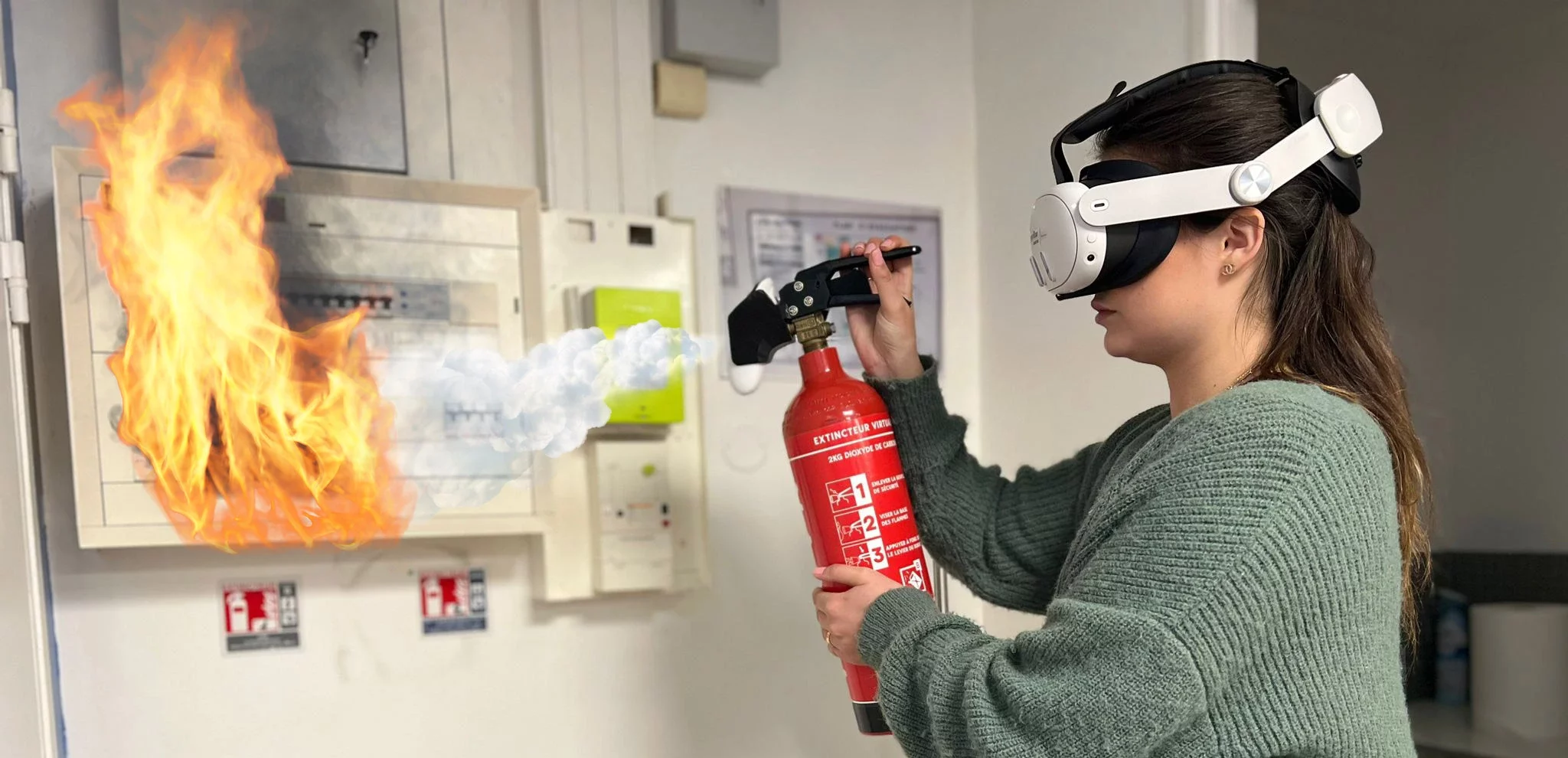
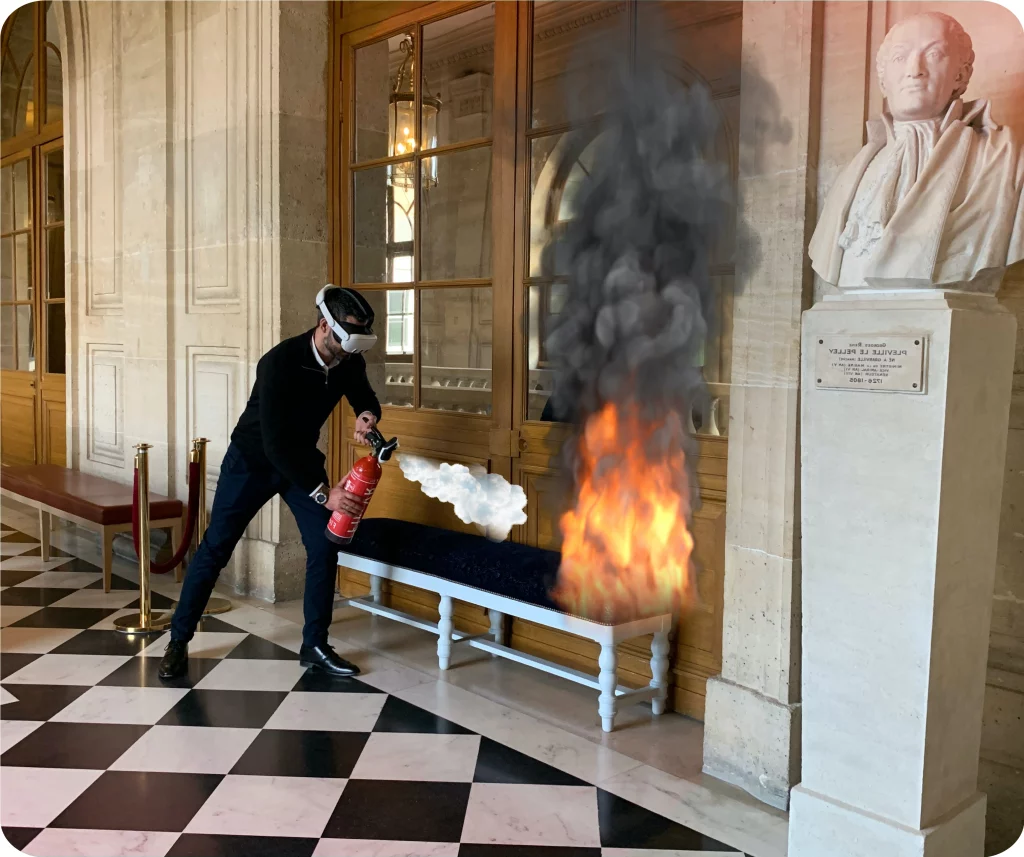
Together with Irwino, we have established a partnership between our two companies. Irwino had already developed FIRE AR, an innovative solution that uses augmented reality with a real fire extinguisher. In this experience, the trainee sees the fire superimposed onto their real-world environment and must respond as if there were a real fire.
Our contribution? Adding the missing dimension: smell.
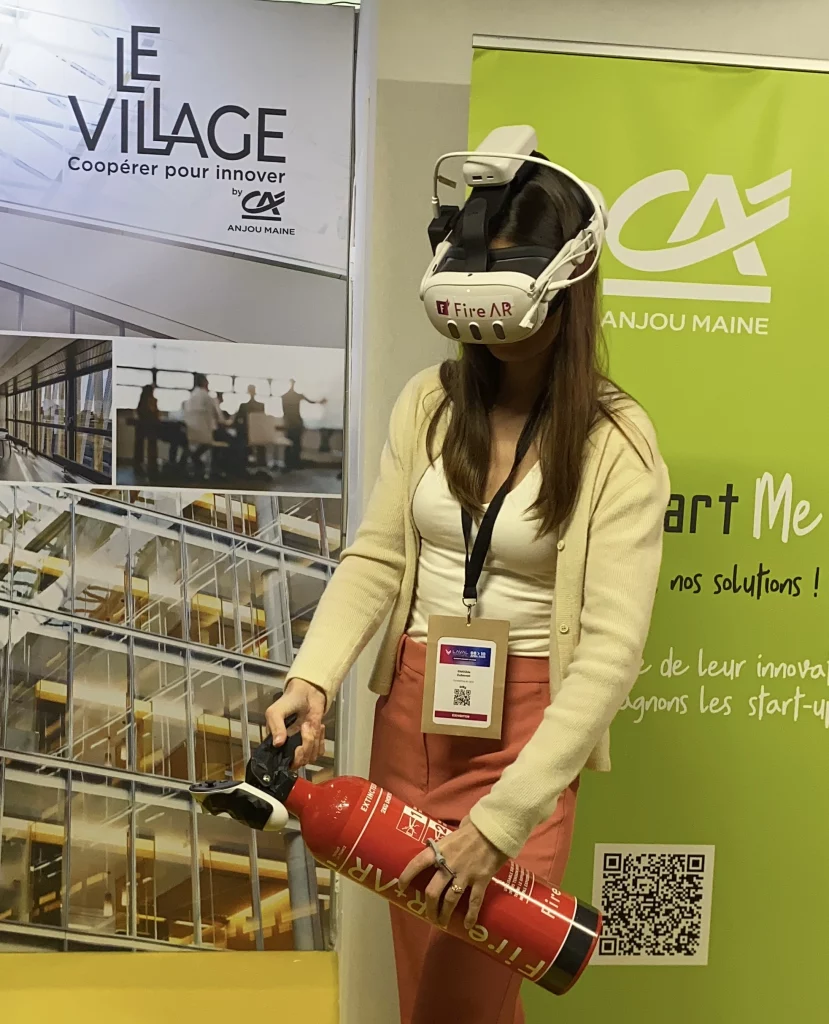
Irwino’s concept was already powerful. By combining it with our expertise in scent, we have created a more immersive, realistic and effective training experience. That is what we came to demonstrate at Laval Virtual: to show that by combining the power of augmented reality with olfactory memory, we are truly revolutionising fire safety training.
Why include the sense of smell in an AR training course?
Augmented reality is already powerful. You can see the danger in your own environment and handle real tools. But something essential is missing: the sensory cues that, in reality, alert you even before you see the problem.
A practical example: A firefighter often smells smoke before seeing the flames. If the fire is behind a closed door, it is the smell that will indicate the presence of the fire and its intensity. In traditional AR training, this signal is lost. With our system, it returns.
The trainee doesn’t just see the danger: they smell it. And that changes everything.
How does it work technically?
Our device attaches directly to the augmented reality headset worn by the trainee. Everything is automated and programmed in advance of the training session.
The typical scenario:
- The trainer programmes the scenario in advance
- The trainee puts on the AR headset fitted with our scent diffuser
- They look around and see the fire appear in their surroundings via augmented reality
- As they approach the source, our system automatically triggers the release of a fire odour
- The closer they get to the virtual flames, the stronger the odour becomes
- They can therefore smell the smoke even before turning a corner or opening a door
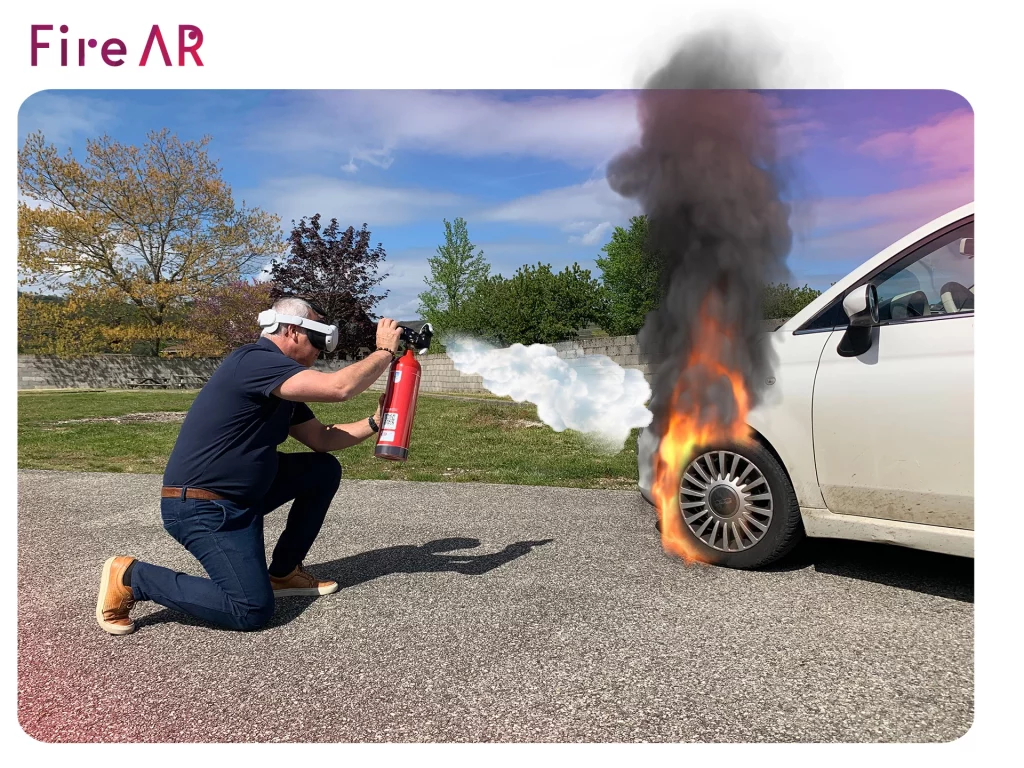
Everything is automatically synchronised with the trainee’s position in the virtual environment. No input from the trainer is required, and there are no buttons to press. The system detects proximity and adjusts the intensity in real time.
The power of olfactory memory
Why place so much emphasis on smell?
Because our brain processes smells differently from other senses.
The sense of smell is directly connected to the limbic system, the part of the brain that manages emotions and memory. As a result: memories linked to smells are more emotional and longer-lasting than those linked to sight or sound.
What does this mean in practical terms for someone undergoing fire safety training?
It means that on the day they face a real fire, the smell will instantly trigger the correct reflexes they learnt during training. Even before conscious thought kicks in. It is a near-automatic reflex that can save lives.
Training using smells creates reflexes that are more deeply ingrained, more lasting and more effective under stress.
Feedback from the Laval Virtual trade fair
The demonstration took place just a few weeks ago, and the feedback from visitors who tried out the experience has been very positive.
Many trainers and safety professionals came along to give it a go. Their most common reaction? “Ah yes, that really makes a difference. You can see the value of it straight away.”
Some even told us that this was the first time a virtual training course had given them such a sense of complete realism.
The benefits for training centres
Complete safety: No real fire, no toxic smoke, no risk of burns. Trainees can make mistakes, try again and learn in complete safety.
Unlimited practice: In traditional training with real fire, each exercise is costly in terms of equipment and preparation time. In augmented reality with scent, you can repeat the exercise as many times as necessary. Trainees can practise until they have mastered the techniques perfectly.
Enhanced immersion: Augmented reality on its own is good. When combined with smell, the brain processes the information more effectively because the experience is more complete and realistic. The trainee isn’t just pretending: they are truly experiencing the situation.
Flexibility of scenarios: You can programme different types of lighting, different brightness levels and different room layouts. And for each scenario, you can adjust the scent diffusion accordingly.
Our role in this project
Irwino has developed FIRE AR, drawing on its extensive expertise in augmented reality training. We have enabled the addition of an olfactory dimension to their solution.
Our device fits onto their headset, our system synchronises with their app, and together we create a more comprehensive training experience. That is also our strength: integrating into existing projects to enhance them.
What about other types of training?
We are able to emit any scent. For fire safety, for example, we can emit the scent of gas or chemicals to alert trainees even before they see the flames.
But many other applications are also conceivable:
- Training for chefs (recognising the smells of burning and cooking)
- Medical training (recognising certain conditions by smell)
- Operations in hostile environments (identifying hazards by smell)
Any profession that requires recognising smells or operating in environments with distinct odours could benefit from this approach.
The future of vocational training
That’s what we demonstrated at Laval Virtual: adding scent to augmented reality makes training more effective and memorable. And this is just the beginning.
Do you develop VR or AR training programmes? Would you like to incorporate scent to enhance the learning experience? Let’s discuss your project.